Bank cards on public transport: payment method or travel ticket?
Bank cards on public transport: payment method or travel ticket?
Bank cards are part of everyday life. People use them to pay in shops, make online purchases and complete contactless transactions.
In public transport, their role is evolving. They are no longer used solely to buy a travel ticket. With Open Payment, a bank card can become the travel medium itself.
This development may seem simple from a passenger’s perspective. However, it involves two very different uses of a bank card.
Bank cards as a payment method
The first use is similar to a conventional purchase.
Passengers use their bank card to buy a travel ticket. They can make the purchase at a ticket machine, through an online shop or mobile app, or from a member of staff.
In this case, the bank card is used only to pay for the transaction.
The travel ticket is then stored on another medium:
- a paper ticket;
- a transport card;
- a mobile app;
- a digital ticket.
The bank card and the travel ticket therefore remain separate. One is used to pay. The other is used to travel.
When a bank card becomes the travel ticket
With Open Payment, the process changes.
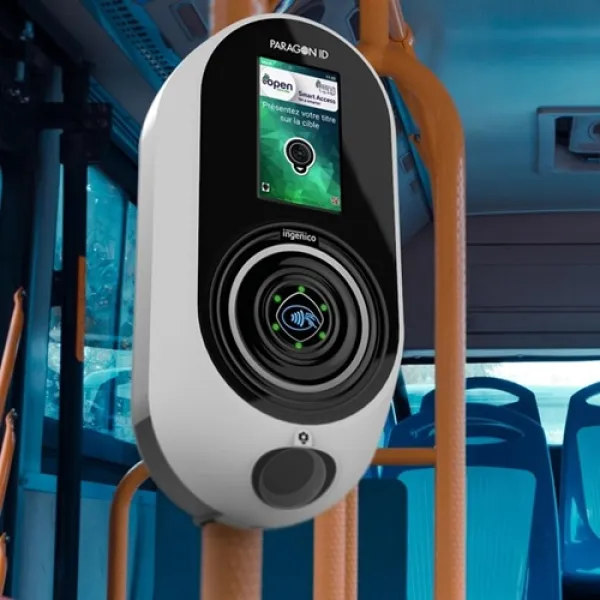
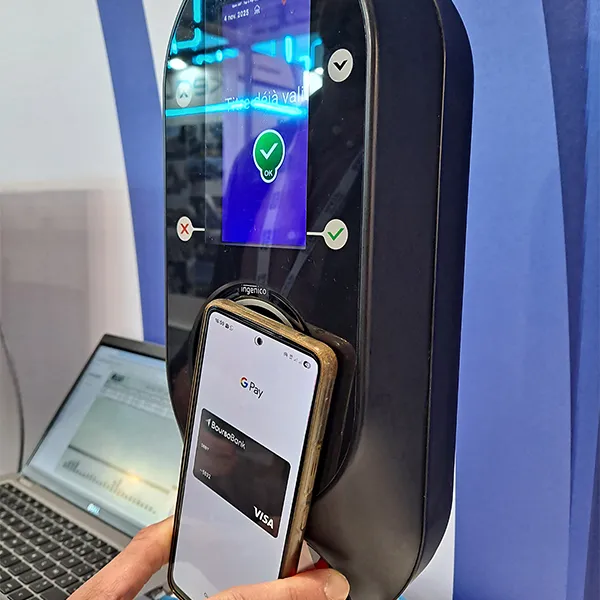
A contactless bank card becomes the medium used to validate a journey. The same principle applies to a smartphone or smartwatch linked to a digital wallet.
Passengers no longer need to buy a ticket in advance. They simply present their usual payment method to a compatible validator.
In just a few seconds, they can:
- board the vehicle;
- tap their card, smartphone or smartwatch;
- validate their journey;
- continue travelling.
No dedicated transport card is required. Depending on how the network operates, passengers may also be able to travel without creating an account in advance.
How does Open Payment work?
For passengers, the action is familiar: they tap their contactless payment method on the validator.
Behind the scenes, the system processes a transaction specifically designed for public transport. It recognises the payment method used and associates it with the journeys made.
Depending on the rules defined by the network, the system can then apply the appropriate fare.
Open Payment is therefore not simply a matter of installing a payment terminal on board a vehicle. It must integrate with the entire ticketing ecosystem.
Validators, fare rules, management systems, data flows and payment services must all work together.
A simpler experience for occasional passengers
Open Payment is particularly well suited to visitors, tourists and occasional passengers.
When someone uses a transport network for the first time, several questions can make the journey more complicated:
Which ticket should they buy? Where can they buy it? Which zone should they select? Do they need to create an account? Is a dedicated transport card required?
With Open Payment, the journey becomes more straightforward.
Passengers use something they already carry and know how to use. They no longer need to understand the entire fare structure before boarding.
This simplicity can:
- reduce queues at points of sale;
- make the network easier to access;
- reduce the number of steps before the first journey;
- improve the visitor experience;
- make public transport more accessible.
At a time when passengers expect simple and immediate services, this level of convenience can become a real driver of network attractiveness.
What are the benefits for transport networks?
Open Payment improves the passenger experience. It can also help simplify certain network operations.
By reducing reliance on physical media, it can lower some of the costs associated with producing, storing and distributing tickets.
It also provides easier access for people who use the network infrequently or do not wish to purchase a dedicated travel card.
For transport authorities and operators, the main benefits include:
- a smoother experience for occasional passengers;
- easier access to the network;
- fewer constraints linked to physical ticket distribution;
- better alignment between public transport and everyday digital habits;
- a more modern and attractive network image.
The aim is not necessarily to replace every other ticketing medium. Open Payment adds another way to access public transport, designed to meet the needs of specific passenger groups.
A solution that must integrate with the ticketing ecosystem
To be effective, Open Payment must work with the other components of the transport system.
Passengers see a simple action. The network must ensure that the entire chain works seamlessly: validation, transaction processing, fare rules, data management and operational monitoring.
This is why a modular approach is essential.
Every network has different requirements. Its size, existing equipment, fare structure and objectives all influence the solution that should be implemented.
Open Payment can therefore be integrated gradually into an existing ticketing platform or as part of a wider modernisation project.
OMEA ID expertise for a smoother ticketing experience
OMEA ID supports transport networks in implementing ticketing solutions tailored to their needs.
Its expertise covers the entire ticketing chain, from validation equipment and digital services to back-office systems and data management.
Through a modular approach, OMEA ID enables networks to evolve their systems according to their size, passenger needs and priorities.
Open Payment is part of this approach. It complements other ways of accessing public transport and helps create a simpler, smoother and more intuitive passenger experience.
For passengers, the best journey is often the one that requires the least effort.
And ultimately, the best travel card may already be in their wallet.

Heading
Looking to add Open Payment to your ticketing ecosystem?
Contact us
Frequently asked questions about Open Payment
Open Payment allows passengers to use a contactless bank card, smartphone or smartwatch directly as their travel medium. They can tap to travel without buying a separate ticket in advance.
No. A bank card can simply be used to pay for a ticket stored on another medium, such as a paper ticket, transport card or mobile app. With Open Payment, the bank card itself becomes the medium used to validate the journey.
Not necessarily. Depending on the transport network, passengers can usually tap and travel without creating an account in advance. Some networks may offer optional online accounts to view journeys, payments or receipts.
Yes. Compatible smartphones and smartwatches linked to a digital wallet can also be used for Open Payment, provided the transport network supports these payment methods.
Open Payment can simplify access to public transport, improve the experience for occasional passengers and visitors, and reduce reliance on physical ticket distribution. It can also complement existing ticketing solutions as part of a modular transport ecosystem.